
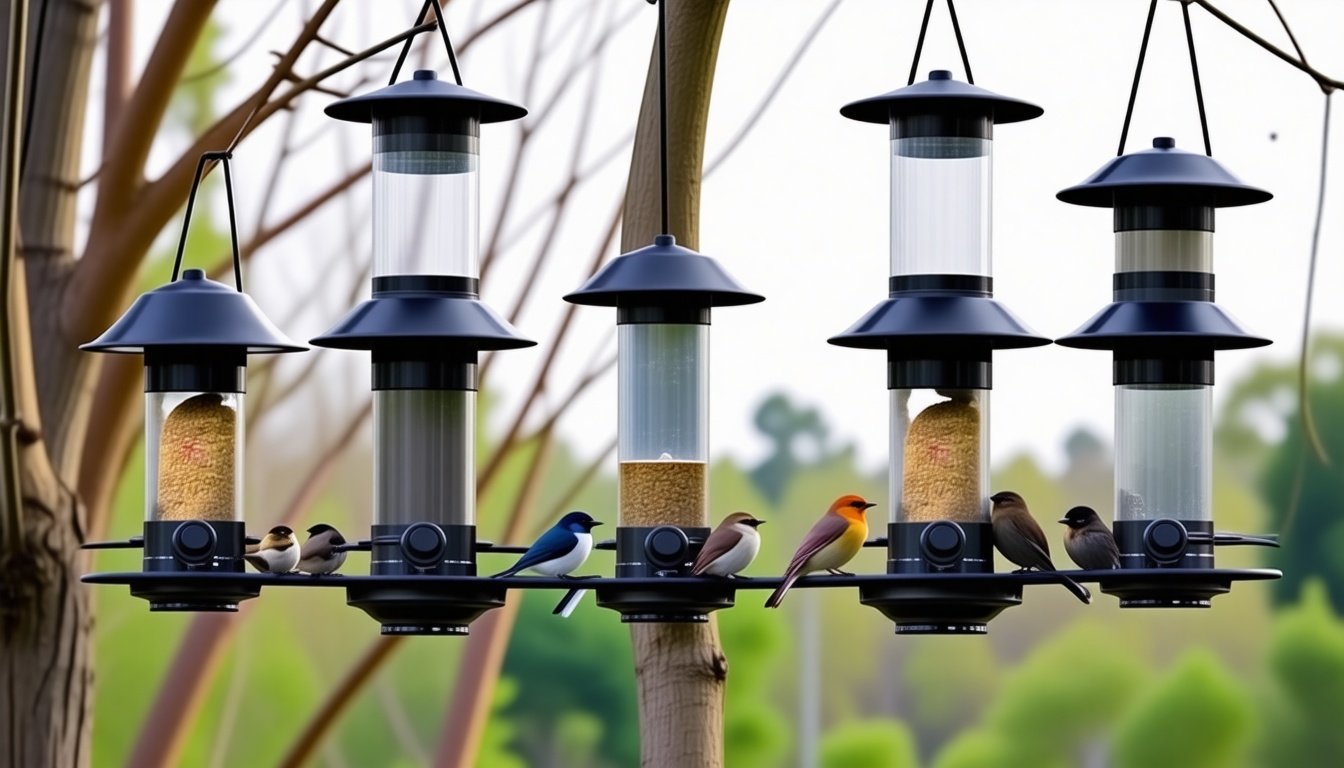
Okay, so you have a backyard, maybe a cozy little patch of green, where the daily drama of birds unfolds like a tiny soap opera you never signed up for but secretly adore. You have one bird feeder, and it is doing its job—chickadees flit around, blue jays drop by for a squawk, and maybe even a cheeky squirrel plays tag with them. But then your bird-obsessed soul decides, why stop at one? Why not have two, or three, or a little forest of feeders scattered like tiny feeding stations for our feathered friends?
Sounds great, right? Except there is this nagging question: how far apart should these feeders be? Put them too close, and you might as well have invited a gang war. Place them too far, and the birds might just treat each station like its own little kingdom, never mingling, and you miss out on the mix-and-match magic of different species sharing your backyard stage. So what is the magic number? The sweet spot? How do you set up multiple bird feeders so it feels like a friendly neighborhood instead of a bird battleground?
Why Does Distance Even Matter?
At first glance, you might think birds just go where the food is and don’t care about boundaries. Spoiler: birds do care. They like their personal space. Think about it—we all want a bit of elbow room when eating, especially if someone bigger or louder than us shows up. They also have favorite hangout spots and territorial behaviors. Some are chill; some are drama queens ready to fight over the last sunflower seed like it is the crown jewels.
When feeders are too close, the whole vibe can get tense. You might end up watching a never-ending battle between the neighborhood bully cardinal and the shy titmouse. But put feeders too far apart, and you risk each one feeling lonely, with fewer visitors and less lively action.
Bird Behavior and Feeder Placement
- Territorial birds: Some species, like certain woodpeckers or cardinals, do not like sharing space. They guard their feeder like it is their castle.
- Social birds: Finches and chickadees often enjoy company and are happy visiting feeders close to each other.
- Feeding styles: Ground feeders like doves prefer a quiet area far from high feeders, while jays love open visibility.
Knowing the personalities of your backyard visitors can help you guess how much space they will tolerate near your feeders.
What Happens When Feeders Are Too Close?
Imagine you set up two feeders hanging literally a foot apart. It sounds efficient—double the food, double the fun. But watch what happens: the bigger, bossier birds claim both spots. The timid ones get pushed out or just keep to hiding spots, watching the drama from afar. No variety, no peaceful mingling. And your dreams of seeing a colorful crowd of different birds? Dashed.
Another thing: close feeders can make your yards more crowded with aggressive birds. They might chase each other nonstop. That might be entertainment, but it is stressful for the birds and not so great to look at for you, unless you enjoy daily royal rumble reruns.
Other Problems with Clumped Feeders
- Cat visits: Concentrated bird traffic can attract predators who enjoy easy pickings.
- Disease spread: Birds share germs more easily when feeders are too close together, especially if they fight over the same spot.
- Seed waste: Fights cause spillage and wasted food when birds fling seeds out of frustration.
How Far Apart Should Multiple Feeders Be?
Okay, here comes the million-dollar question. Drumroll please.
The general rule of thumb is to space feeders at least 10 to 15 feet apart. It sounds like a lot, but it actually lets each bird feel like they have their own slice of paradise. This distance reduces squabbles, spreads out bird traffic, and encourages different species to visit different spots. You get more action across the yard and less tension at any one feeder.
That said, if your backyard is small, 10 feet might be impossible. Try for as much space as possible, aiming generously. Even 5 to 6 feet helps compared to feeders bunched up like sardines.
Why 10 to 15 Feet?
- Birds see and hear others. This distance gives the message: “I am feeding here, find your own spot.”
- Many backyard birds defend territory with a radius of about 10 feet. Spacing feeders beyond that reduces fights.
- Allows you to create mini-habitats, catering to different species’ preferences.
Think of it like social distancing but for birds—helpful and peaceful for everyone.
Mix It Up: Different Feeders for Different Birds
Perhaps the coolest part about multiple feeders is diversity. You might want a suet feeder dangling from a tree, a platform feeder on the ground, and a classic tube feeder on the porch. Spacing them out helps each feeder attract its own crowd without drama.
- Place seed feeders 10-15 feet from suet feeders: Woodpeckers love suet but do not usually share that space with finches munching sunflower seeds.
- Keep ground feeders away from high perches: Doves and sparrows prefer quiet ground spots, away from birds overhead.
- Spot feeders near shelter: Shrubs or dense branches nearby give birds quick escape options.
Basically, think like a bird party planner—give each group their own room to dance.
When Distance Just Isn’t an Option
What if your backyard is tiny and spacing 15 feet feels like a fantasy? Do not worry. You can still make multiple feeders work. Focus on timing and layout.
- Change feeding times: Put out some feeders in the morning and others in the afternoon. Birds will visit each when it is available.
- Vary seed types: Use different seeds or mixes in each feeder to attract different species.
- Add visual barriers: Place feeders near shrubs or small fences to create physical separation.
Even small tweaks make a difference. You get less chaos, more visitors, and happier birds.
Keeping It Friendly: Healthy and Happy Bird Feeding
Multiple feeders are a joy, but remember, feeding birds is like hosting guests. You want them to come back, not get stressed or sick.
- Keep feeders clean. Wash feeders regularly to stop mold and diseases.
- Make sure feeders have easy access but are safe from cats and predators.
- Change seed often and avoid letting feeders get empty for long stretches.
- Watch and learn your backyard birds — sometimes small changes in feeder placement create big changes in visitor happiness.
Final Thoughts
Spacing your bird feeders gives everyone a chance to shine. Give your backyard birdies their own little kingdoms spaced just right, and you get a nonstop show of fluff, feathers, and tiny feet. You get more species, less squabbling, and a backyard that feels alive with nature’s energy. It is a simple idea, but it can genuinely change what you see from your window every day.
So grab that measuring tape, step outside, and start placing your feeders with a little breathing room. The birds will thank you, and your backyard will become a bird-watching haven you will keep coming back to again and again.