
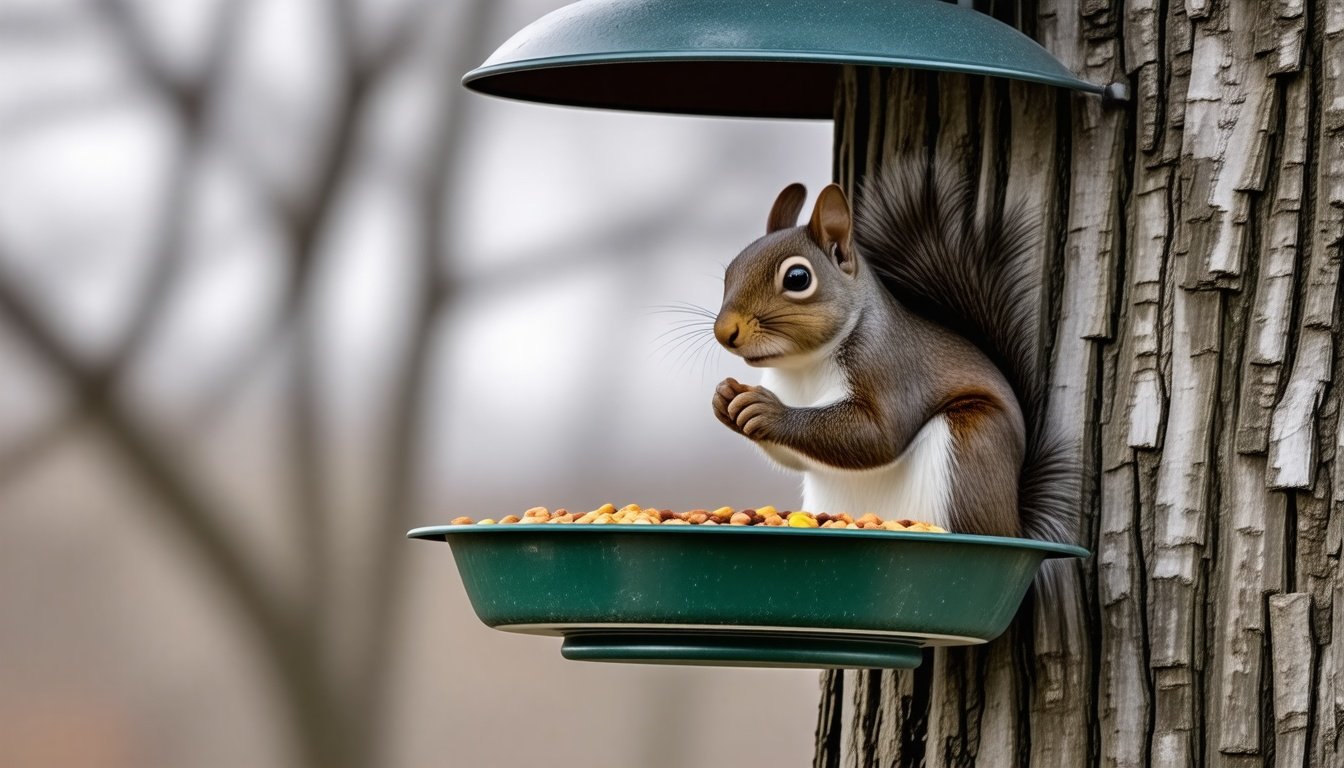
There you are, standing in your backyard, coffee in hand, watching a cheerful flurry of feathers flit about your carefully crafted bird feeder. You smile because you have created a little paradise, a sanctuary for birds that brings a burst of life to your garden. Then, out of nowhere, a furry intruder appears—your friendly neighborhood squirrel. Suddenly, your peaceful bird party turns into a chaotic acrobatics show, with squirrels swinging from branches, flipping upside down on poles, and making off with every last seed. Sound familiar?
Squirrels are like the uninvited guests who make themselves right at home, especially when bird feeders are involved. They are smart, nimble, and stubborn, and somehow they always find a way to crash the bird buffet. But you do not have to give up your birdwatching dreams just because of these bushy-tailed bandits. There are plenty of clever ways to outsmart squirrels and keep your feeders meant for birds, well, for birds.
Why Do Squirrels Love Bird Feeders So Much?
Before we dig into the “how” of keeping squirrels away, it is helpful to understand the “why.” Squirrels love bird feeders for one simple reason: food. Bird seeds, nuts, and suet are all delicious snacks to them. When you put food out, you are basically holding a giant, irresistible buffet sign for every squirrel in the neighborhood.
Also, bird feeders are often easy to access. Squirrels are fantastic climbers and jumpers; most things you hang up in a tree or on a pole might as well be squirrel playground equipment. So, when they spot a feeder, they make a beeline for it.
Knowing this makes it clear that you have to get creative if you want to protect your bird feeder and keep those flying friends happy.
Tip 1: Pick the Right Feeder
Not all bird feeders are made the same. Some are more squirrel-resistant than others, and choosing the right one is the first step. Look for feeders designed with squirrels in mind—ones with cages, metal parts, or mechanisms that close off access when a heavier animal (like a squirrel) tries to feed.
- Caged feeders: These have a metal cage around the feeding ports that lets small birds in but keeps squirrels locked outside.
- Weight-activated feeders: These smart feeders close off the seed openings when a squirrel’s weight presses down, but open for lighter birds.
- Seed bells and suet cages: Placing suet in cages or offering seed in hanging bells can deter squirrels who like to chew and grab.
Also, think about the material. Plastic feeders can be nibbled through, and squirrels have been known to destroy them just for fun. Metal feeders or those with sturdy designs make it much harder for squirrels to win the battle of snack stealing.
Tip 2: Location, Location, Location
Where you place your feeder can make or break your squirrel-control efforts. Squirrels are agile climbers and can jump quite far—up to 10 feet in some cases. So putting your feeder within jumping distance of a tree, fence, or roof is like handing them a fast pass to the snacks.
- Try positioning your feeder at least 10 feet away from any launching point—trees, fences, or rooftops.
- Mount feeders on poles with baffles (more on those soon) to block the climbing route.
- If your yard is small and does not have much space to move the feeder, hang it from a thin wire stretched between two points, far from trees or other places squirrels can jump from.
Sometimes, spotting the perfect spot feels like a game of backyard chess. You have to think a few moves ahead, but when you find that sweet spot, you will see birds swooping in while the squirrels stay frustrated on the sidelines.
Tip 3: Use Baffles Like a Pro
Baffles are the unsung heroes of bird feeders. Think of them as squirrel security guards—physical barriers that stop squirrels from climbing up poles or hanging down to feeders. They come in several shapes:
- Domes: These look like upside-down bowls and fit over the top of poles or hook feeders.
- Cylinders: These slide down a pole, usually made of slippery materials like metal or plastic.
- Cones and expandable rings: Designed to make climbing difficult or impossible.
Install the baffle properly. It should be at least 5 feet from the ground and 10 feet away from jumping places. The smoother and rounder it is, the less likely squirrels will get a grip. If you see dents or claw marks, it might be a clue your baffle needs replacing or repositioning.
Tip 4: Get Creative with Feeding Stations
If you are DIY-inclined, this is where you can really have fun. Making your own squirrel-proof feeding station is part science experiment, part art project. You can combine feeders, baffles, perches, and even water features to create something truly unique.
- Suspended feeders: Hang feeders from thin wires or fishing lines that squirrels cannot balance on easily. Adding spinning parts can increase the challenge for squirrels.
- Squirrel roller feeders: Special feeders on rotating poles that spin when squirrels try to climb.
- Use slippery poles: Wrap metal pipes in smooth materials or spray with a slick coating.
Plus, making your own feeder or barrier means you can customize it exactly to your yard and your local squirrel habits. Bonus points for feeling like a backyard engineer!
Tip 5: Try Different Seeds
Here is a sneaky trick: squirrels love sunflower seeds and corn. If your feeder is stocked with these, it will act like a welcome mat for squirrels. Birds, however, can enjoy other types of seeds just as much.
- Offer safflower seeds: Birds like cardinals and finches love these, but squirrels find them bitter.
- Nyjer (thistle) seeds: Perfect for small finches and less appealing to squirrels.
- Millet and cracked corn: These are popular with birds but not always the first choice for squirrels if safflower or nyjer is available.
By choosing seeds that birds love and squirrels leave alone, you can make your feeder less attractive to the furry bandits without starving your feathered friends.
Tip 6: Keep Your Yard Clean
It might seem too simple to matter, but it is true: keeping your ground free of spilled seeds and shells can cut down on squirrel visits. Squirrels, like most creatures, are opportunists. If they find a bounty of seeds on the ground, they will keep coming back even if they cannot get into the feeder.
So, take a few minutes every day or couple of days to sweep up the seed mess below your feeder. Removing old seed also helps prevent mold and disease for your bird visitors, so it is a double win.
Tip 7: Use Natural Deterrents
If you do not want to buy special gadgets, some natural tricks can help too. Squirrels do not like strong smells that birds do not mind.
- Cayenne pepper or chili powder: Sprinkle a bit on the seed or around the feeder (do not use on suet). Birds will not care, but squirrels usually avoid spicy stuff.
- Garlic cloves: Placing a few cloves around your feeding area might slow down squirrel visits.
- Essential oils: Peppermint oil sprayed on squirrels’ usual paths can discourage them.
Just remember: if you have pets or kids around, use natural deterrents carefully so you do not cause problems for them.
Tip 8: Be Patient and Keep Trying
Squirrels are clever, and they will test your efforts over and over. Sometimes they try one method, then figure out another. It might take a mix of tricks before you find what works for your unique backyard situation.
A little patience goes a long way. Watch how squirrels behave, then switch up feeders, locations, or use more barriers. Adapt your tactics like a squirrel detective on the case.
And hey, sometimes accepting a little squirrel presence is part of the charm of backyard birdwatching. They are part of the wild story unfolding right outside your window.
Quick Recap of the Best Tips
- Choose squirrel-resistant feeders with cages or weight-activated parts.
- Place feeders far from trees, fences, and launching spots.
- Add baffles to poles or hangers to block climbing.
- Try homemade or creative feeder stations.
- Switch to bird-friendly but squirrel-unfriendly seeds.
- Keep your yard clean of spilled seeds.
- Use natural deterrents like cayenne pepper or peppermint oil.
- Stay patient and adjust your setup as needed.
At the end of the day, your backyard is your little slice of nature. You want to enjoy watching birds thrive without squirrels turning it into their personal playground. Try out a few of these tips, see how your backyard responds, and keep your eyes peeled for those clever critters. With a little effort, you can have a feeder full of happy birds and a squirrel-free snack bar. Well, mostly squirrel-free anyway. Because let us be honest—those little acrobats are tough to keep down for long.